
What to know: ESG procedure and GLP-1 medications
The ESG procedure and GLP-1 medications like semaglutide both support weight loss—but they work in very different ways. If you’re seeking an alternative to GLP-1s, ESG offers a non-surgical option that may work for you. The following table includes information about ESG and semaglutide. Other GLP-1 medications may have different information, so be sure to check their websites and speak to a doctor about what’s right for you.
| ESG procedure | Semaglutide (Wegovy®) |
| What it is | One-time, non-surgical weight loss procedure plus ongoing diet and lifestyle changes to keep weight off3 | Ongoing prescription weight loss medicine (injections or pills) plus reduced-calorie diet and increased physical activity to lose weight and keep weight off* |
| Who it's for | Adults with obesity who have a body mass index (BMI) of 30-50 kg/m2, prefer a non-surgical weight loss option, are not eligible for weight loss surgery, and have not been able to lose weight or maintain weight loss through diet and exercise alone3 | Adults and children 12 and up with obesity, or some adults with excess weight (overweight) who also have weight-related medical problems* |
| How it works | Non-surgical procedure performed by a specially trained doctor that reduces stomach capacity by 70-80% to help you feel full longer3 | Daily or weekly medication used to help you lose weight and keep weight off* |
| Recovery time | Studies have shown that most people typically went home the same day as the procedure and returned to routine daily activity in 2-3 days1,2 | No downtime* |
| Long-term guidance | Diet and lifestyle changes are necessary to maintain weight loss after ESG3 | Medication, together with a reduced-calorie diet and increased physical activity, are necessary to maintain weight loss* |
| Most common side effects | Nausea, abdominal pain, vomiting, and abdominal discomfort, constipation, heartburn, and bloating3 | Nausea, diarrhea, vomiting, constipation, stomach (abdomen) pain, changes in skin sensations, headache, tiredness (fatigue), upset stomach, dizziness, feeling bloated, belching, low blood sugar in people with type 2 diabetes, gas, stomach flu, heartburn, and hair loss* |
*Semaglutide (Wegovy®) is included as a representative example of a GLP-1 medication, based on information available on the Wegovy® website (www.wegovy.com) as of June 2026. Individual GLP-1 medications may differ in mechanism of action, indications, efficacy, dosing and administration, safety profile, and other characteristics. Accordingly, information presented for Wegovy® should not be interpreted as representative of all GLP-1 medications. This comparison is provided for informational purposes only and does not constitute an endorsement of Wegovy® or any other GLP-1 medication. See Wegovy® IFU for further information.
A closer look at ESG weight loss results
To reach your specific weight loss goals, consult with an ESG doctor, dietitian, and nutritionist.
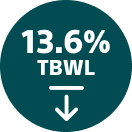
In a clinical trial, people experienced 13.6% total body weight loss (TBWL) one year after the procedure when combined with diet and lifestyle changes.3
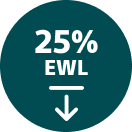
In the same clinical trial, 68% of people maintained 25% excess weight loss (EWL) two years after the procedure.3
Potential side effects of ESG
The most common side effects of an ESG procedure are nausea, abdominal pain, vomiting, and abdominal discomfort—especially during the first week. Other symptoms like constipation, heartburn, or bloating may occur but usually go away within 30–60 days. Your doctor can help you understand what’s typical and when to check in if something feels off.

Which weight loss option is right for you?
Answer two quick questions about what matters to you in a weight loss solution. It only takes a minute! Based on your answers, you’ll see how ESG lines up with what you care about most.
This patient testimonial is sponsored by Boston Scientific. Results are from individual customer testimonials. Results in other cases may vary. In a study, patients with class 1 (BMI 30 to <35 kg/m²) or class 2 (BMI 35 to <40 kg/m²) obesity who underwent ESG in conjunction with prescribed diet and exercise counseling achieved an average of 13.6% total body weight loss at year one.3
Ready for a weight loss alternative to GLP-1s?
Connect with a local ESG doctor today to learn more about the non-surgical ESG weight loss procedure.
Important OverStitch Endoscopic Suturing System Safety Information
ESG is performed using a suturing device called OverStitch. Learn about the risks of the OverStitch Endoscopic Suturing System & OverStitch NXT Endoscopic Suturing System (“OverStitch”) for bariatric surgery.
Talk with your doctor to fully understand all the risks and benefits associated with using this device. Ask your doctor whether this device is right for you.
Indications for Use:
OverStitch is for adult patients with obesity with BMI between 30-50 kg/m2. OverStitch can reduce the size of the stomach by stitching the inside. It can also fix the stomach outlet from previous bypass surgery.
When OverStitch is used to help with weight loss, you need to follow a healthy diet and exercise program. You may not lose weight if you do not adopt healthy habits.
Contraindications:
Your doctor will ask you about your medical history and perform a physical exam to decide if OverStitch is right for you. At the time of your procedure, the doctor may detect internal issues that prevent you from receiving OverStitch. For example, stomach ulcers or inflammation in the stomach may impact device placement.
You should not receive OverStitch if you: have a large hiatal hernia; have a history of bleeding in your stomach or food pipe; have a history of eating disorders; are pregnant; have bleeding disorders or are on blood thinners.
Warnings:
Talk to your doctor if you develop major, continued upper abdominal or back pain with difficulty breathing at any time after getting OverStitch.
OverStitch contains nickel. Nickel may cause an allergic reaction in people with nickel sensitivity.
Potential Risks:
Breathing any foreign object or substance such as food, saliva, or stomach contents into your lungs; Intestine blockage; Switching to a different type of surgery; Nausea, vomiting, dehydration; Bleeding; Infection; Swelling, redness, and pain in tissues caused by injury or damage; Damage to or a hole through the tissue around the stomach, food pipe or surrounding organs; Unintended transfer of fluid or gas from one area of the body to another; Pain; Feeling pins and needles; Buildup of fluid around the stomach; Air leaking from the lungs; Difficulty breathing; Narrowing or tightening in the stomach; Wound opening; Death
MRI Safety Information:
OverStitch can be MRI scanned under certain conditions. Scanning under other conditions may result in injury or device malfunction. Inform your doctor or MRI technician of the device before undergoing an MRI scan. This allows them to take any needed precautions.
Individual weight loss may vary.
For the OverStitch Endoscopic Suturing System you need to follow a healthy diet and exercise program to lose weight. You may not lose weight if you do not adopt healthy habits. Your doctor’s clinical team, including dieticians, nutritionists and/or exercise trainers, should help you on your weight loss journey.
All trademarks are the property of their respective owners. Any use of third-party trademarks, logos, or brand names is for identification purposes only and does not imply endorsement or affiliation.
1. Kumar N, Abu Dayyeh BK, Lopez-Nava Breviere G, et al. Endoscopic sutured gastroplasty: procedure evolution from first-in-man cases through current technique. Surg Endosc. Apr 2018;32(4):2159-2164.
2. Abu Dayyeh BK, Acosta A, Camilleri M, Mundi MS, Rajan E, Topazian MD, Gostout CJ. Endoscopic sleeve gastroplasty alters gastric physiology and induces loss of body weight in obese individuals. Clinical Gastroenterology and Hepatology. 2017;15(1):37-43.e1.
3. Abu Dayyeh BK, Bazerbachi F, Vargas EJ, et al. Endoscopic sleeve gastroplasty for treatment of class 1 and 2 obesity (MERIT): a prospective, multicentre, randomised trial. The Lancet. July 2022;400(10350): 441–451.
Caution: U.S. Federal law restricts this device to sale by or on the order of a physician.
All photographs taken by Boston Scientific.